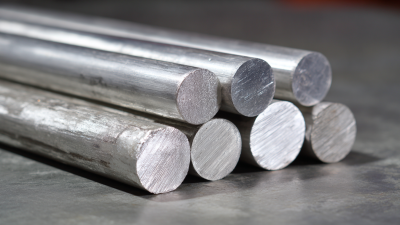
The 5052 Aluminum Bar is really a go-to material in lots of industries around the world. Its special properties make it super popular for different uses, especially in marine and automotive fields. I came across a report by Research and Markets that predicts the global aluminum market will grow at about 6.5% annually from 2021 to 2026. That’s mainly because people are wanting lighter materials, and 5052 Aluminum Bar is leading the charge thanks to its great resistance to corrosion and its ability to be easily welded.
Big players like Alcoa and Hydro are pouring a lot of money into producing more 5052 aluminum. This really helps make sure that buyers around the globe can get what they need when they need it. The Aluminum Association even points out that 5052 Aluminum Bar is pretty easy to work with, which is a huge plus. Of course, there are some bumps along the road. For example, finding top-quality bars can be tricky with global supply chains being so unpredictable right now. So, buyers definitely need to weigh these things carefully.
All in all, the rising popularity of 5052 Aluminum Bar seems like a good sign for the industry. But at the same time, manufacturers really should focus on being more sustainable. For instance, in the US, about 75% of aluminum gets recycled, which is decent but still room for improvement. So, even with all these benefits, we can't ignore the challenges — it's important for the industry to keep evolving and thinking about sustainable practices going forward.
The 5052 aluminum bar is highly regarded in various industries due to its unique composition and notable attributes. Comprised primarily of aluminum, it includes magnesium (around 2.5%), contributing to its excellent corrosion resistance and weldability. This makes it an ideal choice for marine applications, automotive, and architectural projects. According to a recent industry report, the demand for 5052 aluminum has increased by 15% over the last two years, reflecting its growing importance in manufacturing.
For optimal performance, understanding its properties is crucial. The alloy's high strength-to-weight ratio makes it lighter than many materials, enabling significant weight reductions in construction. Additionally, its formability allows for intricate shapes and designs. It’s fascinating to note that the global market for aluminum is projected to reach $189 billion by 2026, with 5052 aluminum bar playing a key role in this growth.
Tip: Consider testing small samples of the 5052 aluminum bar before committing to large orders. Doing so helps ensure its suitability for specific applications.
In the realm of industrial materials, not all grades may meet stringent criteria. Some manufacturers may not follow best practices in production, leading to inconsistencies. Buyers should invest time in evaluating suppliers’ reputations. Quality and reliability should never be compromised, especially when safety is involved. Always seek certified vendors who adhere to industry standards to ensure the integrity of your projects.
The 5052 aluminum bar stands out for its excellent corrosion resistance, making it ideal for marine applications. This property ensures longevity in harsh environments. Many buyers appreciate how this alloy maintains structural integrity under various conditions. It’s a practical choice for projects demanding durability.
Another key feature is its high formability. The 5052 aluminum bar can be easily shaped and welded. This makes it a favorite among manufacturers who seek versatility in their production processes. Designers value this aspect too, as it opens up creative possibilities while being practical.
Buyers should note that while 5052 is robust, it isn’t the hardest aluminum alloy. It may not suit every application requiring extreme hardness. Additional considerations include its cost compared to other materials. Understanding these nuances is crucial for making informed decisions. The 5052 aluminum bar indeed presents significant benefits, but awareness of its limitations fosters a more balanced perspective.
The 5052 aluminum bar is widely recognized in industries for its versatility and reliability. Its unique properties make it ideal for marine, automotive, and aerospace sectors. In marine applications, 5052 aluminum provides excellent corrosion resistance. This is crucial for boats and ships exposed to harsh saltwater conditions. Reports indicate that over 60% of aluminum usage in marine environments relies on alloys like 5052.
In the automotive industry, the lightweight characteristic of 5052 aluminum significantly improves fuel efficiency. According to industry studies, vehicles using aluminum components can save up to 20% in weight compared to traditional materials. This makes 5052 aluminum bars a favorable choice for manufacturing body panels and structural components. Furthermore, their ability to withstand significant stress is vital during a vehicle's lifecycle.
Aerospace is another sector where 5052 aluminum bars are making an impact. They are utilized in aircraft components for their favorable strength-to-weight ratio. Industry analyses highlight that aluminum components can reduce an aircraft's weight by approximately 15-25%. However, challenges remain in sourcing these bars sustainably. The demand for recycled aluminum is increasing, emphasizing the need for improvements in the recycling processes. Addressing these issues will be crucial as industries strive for greener practices.
The cost-effectiveness of 5052 aluminum bars makes them a preferred choice in various industries. According to a Global Market Insights report, the demand for aluminum alloys, particularly 5052, is projected to grow at a CAGR of over 6% from 2021 to 2027. This growth can be attributed to the alloy's excellent workability and resistance to corrosion, which reduce long-term maintenance costs.
5052 aluminum bars are lightweight yet strong. This combination is crucial for sectors like automotive and marine manufacturing, where weight reduction leads to fuel efficiency. A study from the Aluminum Association highlighted that replacing steel with aluminum could reduce vehicle weight by 25%, translating to significant savings in fuel costs over time. However, some manufacturers may struggle with the initial investment in high-quality 5052 materials.
The alloy's versatility also contributes to its cost-effectiveness. It can be easily fabricated into various shapes and sizes, making it suitable for diverse applications. This adaptability means companies can minimize waste and optimize production processes. Yet, buyers should reflect on the potential for fluctuating material prices and the importance of sourcing reliable suppliers.
| Benefit | Description | Cost-Effectiveness | Market Applications |
|---|---|---|---|
| Lightweight | 5052 aluminum is significantly lighter than steel, making it ideal for applications where weight savings are critical. | Reduced shipping costs due to lower weight. | Aerospace, automotive, and marine industries. |
| Corrosion Resistance | Excellent resistance to marine and industrial environments, enhancing durability. | Longer lifespan reduces the need for maintenance and replacement. | Construction and outdoor applications. |
| Formability | Easily shaped through bending and fabrication processes. | Lower costs for custom manufacturing and design flexibility. | Manufacturing and electronic components. |
| Mechanical Properties | Good weldability and moderate strength, suitable for various structural applications. | Cost-effective in high-stress environments due to reliability. | Structural engineering and manufacturing equipment. |
| Recyclability | Aluminum can be recycled without losing quality, promoting sustainability. | Reduces overall production costs and environmental impact. | General manufacturing and automotive industries. |
The environmental benefits of using 5052 aluminum bar are notable. This aluminum alloy boasts excellent recyclability. It can be recycled repeatedly without degrading quality. This feature reduces the need for virgin materials. As a result, the carbon footprint associated with production significantly decreases.
5052 aluminum also offers durability, which extends the lifespan of products. Longer-lasting materials mean less frequent replacements. This leads to reduced waste in landfills. Using durable materials can inspire more sustainable practices in various industries. However, it’s essential to acknowledge that while 5052 is beneficial, not all aluminum production processes are eco-friendly. Production facilities vary in their environmental impact.
Choosing 5052 aluminum is a step towards sustainability. Still, buyers should research the sourcing and manufacturing processes. Awareness of these impacts is crucial. Engaging with responsible suppliers can enhance the positive effects of using this material, aligning with broader environmental goals.
When considering aluminum alloys, 5052 stands out for many global buyers. Its unique attributes set it apart from others. 5052 aluminum excels in corrosion resistance, making it ideal for marine and industrial environments. In applications where durability is crucial, its strength is commendable. This alloy also exhibits excellent workability, allowing for easier machining and forming.
In comparison to 6061 aluminum, which is widely used, 5052 has better ductility and is more resistant to stress corrosion. This makes it a preferred choice where flexibility is necessary. However, 6061 often provides higher tensile strength, which can be a concern in demanding structural applications. Buyers need to assess their specific requirements carefully when choosing between these alloys.
While 5052 aluminum is versatile, it is not flawless. Some users have reported challenges with weldability. Adjustments may be needed to achieve optimal results. Additionally, the availability of 5052 in certain regions can be limited, leading to potential supply chain issues. Buyers must weigh these factors against the benefits to make informed decisions.
When sourcing 5052 aluminum bar, buyers must prioritize supplier considerations. The quality of material is critical. According to a market report from Smithers Pira, the demand for high-grade aluminum is expected to rise by 6% annually until 2025. This growth highlights the importance of partnering with reliable suppliers who understand the nuances of aluminum grades.
Another factor is geographic location. Suppliers in regions with strong industrial bases, like North America and Europe, often offer more consistent quality. However, sourcing from Asia is appealing due to lower costs. A study by the Aluminum Association noted that price fluctuations can reach 15% based on region, affecting overall project budgets. Buyers should weigh these factors carefully.
Lastly, technical expertise and support from suppliers matter. Some suppliers may lack the necessary knowledge about the specific properties of 5052 aluminum. This lack of expertise can lead to subpar material performance. Engaging with suppliers who demonstrate a strong understanding of the material's application can mitigate risks associated with sourcing. Knowledge gaps can have costs that aren't immediately visible, making careful selection essential.
In modern industries, the use of customized size 5052 H112 aluminum bars has become increasingly essential due to their superior properties and versatile applications. The 5052 grade aluminum is known for its excellent corrosion resistance, forming ability, and weldability, making it an ideal choice for various demanding environments. The H112 temper enhances these characteristics, providing a good balance between strength and ductility, which is crucial for applications requiring reliable material performance under stress.
The diameter range of 4.0mm to 560mm allows manufacturers and designers to specify dimensions that perfectly fit their requirements. This customization is particularly beneficial in sectors such as automotive, marine, and construction, where precise and reliable materials are needed. From creating intricate components in vehicles to robust structures in marine applications, the adaptability of 5052 H112 aluminum bars supports innovation and efficiency in product design. Furthermore, their lightweight nature reduces overall production weight without compromising structural integrity, leading to enhanced energy efficiency in multiple industrial applications.
: Its excellent corrosion resistance ensures longevity in harsh environments.
It can be easily shaped and welded, offering versatility in production processes.
No, while it is robust, it may not suit applications requiring extreme hardness.
They are lightweight yet strong, reducing long-term maintenance costs, especially in automotive and marine sectors.
Yes, its versatility allows fabrication into different shapes, minimizing waste in production.
Availability may be limited in some regions, leading to potential supply chain issues.
5052 is more ductile and resistant to stress corrosion, while 6061 offers higher tensile strength.
Yes, some users report difficulties with weldability, requiring adjustments for optimal results.
The fluctuating prices of materials can impact project costs due to market conditions.
Awareness of its limits fosters a balanced perspective, aiding informed decision-making.
The 5052 Aluminum Bar is recognized for its exceptional properties and versatility, making it a favored choice among global buyers. This alloy boasts a unique composition that enhances its durability, corrosion resistance, and workability, making it suitable for various applications across multiple industries, from automotive to marine. Additionally, the cost-effectiveness of 5052 Aluminum Bar provides significant value in the global market, allowing buyers to benefit from its long lifespan and low maintenance requirements.
Moreover, the environmental advantages of using 5052 Aluminum Bar, such as its recyclability and lower energy consumption during production, align with the increasing demand for sustainable materials. When sourcing 5052 Aluminum Bar, buyers should consider supplier reliability and product quality to ensure they meet their specific needs. Overall, the 5052 Aluminum Bar stands out as a strategic investment for industries looking for efficient and eco-friendly aluminum solutions.