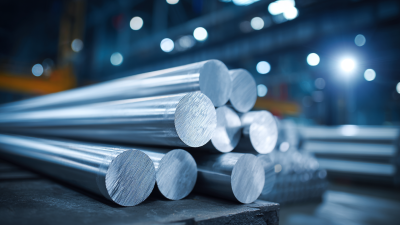
Picking the right 6063 Aluminum Plate isn’t just about looking at price tags or the surface finish. It really starts with understanding where and how you’re going to use it. Did you know that according to the International Aluminium Institute, global primary aluminum production topped 72 million tonnes in 2024? That’s a huge number, and it really shows how essential aluminum still is—whether it’s in building projects, transportation, or industrial manufacturing. But just because the volume is big, doesn’t mean any aluminum plate will do the trick.
Now, 6063 aluminum is a favorite for many folks because of its smooth surface, good extrudability, and decent resistance to corrosion. You’ll often see it used in window frames, enclosures, trims, and lightweight parts. But keep in mind, the environment really matters—if it’s near the coast, salt exposure could be a concern; inside a machine cabinet, heat and vibrations might come into play. So, these details can actually influence what kind of alloy and temper you should choose. Things like temper, thickness tolerance, surface finish, flatness, and how well it cuts—these are equally important. The Aluminum Association has standards and data to help you identify the right alloy and temper, and ASTM B209 lays out requirements for aluminum plates and sheets. But hey, standards are just part of the picture—they can’t replace hands-on experience with the material.
Dr. J. Gilbert Kaufman, a well-known expert in aluminum metallurgy, summed it up nicely: “Alloy choice is a balance of properties, processing, and cost.” And honestly, that’s one of those things that’s so easy to overlook. A shiny, polished 6063 plate might look fantastic, but if its temper isn’t right for bending, it might perform just terribly. On the flip side, choosing a cheaper plate might save a few bucks initially but could end up costing you more if it warps, needs rework, or has to be replaced early. This guide’s here to help you dig into the evidence, understand supplier info, and do some practical checks so you can make a decision you feel confident about. Sometimes, you might need to rethink your assumptions—that’s all part of making a responsible and informed choice.
6063 aluminum plate is a heat-treatable aluminum alloy containing magnesium and silicon. It is valued for its smooth surface, reliable corrosion resistance, and good forming behavior. In practice, suppliers may call thin stock “sheet” rather than “plate.” Thickness terminology should be confirmed before ordering.
Its strength is moderate, usually lower than 6061 aluminum. However, 6063 offers excellent surface quality and responds well to anodizing. These properties make it suitable for architectural panels, covers, frames, trims, and light-duty machine parts. It also welds reasonably well when proper procedures are followed. Surface matters. Scratches can become more visible after finishing, especially on brushed or anodized surfaces.
Temper affects performance significantly. T5 material is cooled after extrusion and artificially aged, while T6 receives additional solution heat treatment. T6 generally provides higher strength, but it may be less forgiving during bending. Check the temper. Also verify thickness tolerance, flatness, alloy certification, and surface condition. A simple caliper check can reveal ordering errors before fabrication begins. Cutting may leave a sharp edge, so deburring remains necessary. A common mistake is choosing 6063 for a heavily loaded structural part because its finish looks attractive. That decision needs review against the actual load, span, fasteners, and working environment. Corrosion resistance is useful, not unlimited. Salt exposure, trapped moisture, and incompatible metals still require careful design.
How to Choose the Right 6063 Aluminum Plate?
Identify the Required Strength, Formability, and Surface Finish
Choosing a 6063 aluminum plate starts with the load, not the catalogue description. Define yield strength, tensile strength, thickness, and safety margin before ordering. A T6 temper usually offers higher strength, while T4 or softer material bends more easily. Do not assume the strongest temper is the best choice. For a bracket carrying repeated loads, check fatigue conditions and fastener areas. For a formed cover, excessive hardness can cause edge cracking.
Formability depends on thickness, bend direction, tooling, and temper. Request a trial bend using the actual thickness. A simple 90-degree test can expose cracking that a datasheet misses. Keep the inside bend radius practical, especially near holes or cutouts. A practical shop check should also examine the sheared edge. Small burrs can become crack starters. This is easy to overlook. The first specification is rarely perfect.
Surface finish should match the final use and inspection distance. Mill finish may suit hidden frames, but visible panels need tighter cosmetic control. Specify acceptable scratches, dents, waviness, color variation, and flatness. If anodizing or painting is planned, confirm compatibility with the selected temper and pretreatment. Verify the material against the applicable standard. Ask for certificates, temper records, and a retained sample. Photograph the surface under consistent lighting. It reduces arguments later. A bright surface can still hide shallow waviness until assembly.
Choosing the right 6063 aluminum plate begins with its working load, not a convenient catalogue number. Thickness should resist bending, surface damage, and repeated handling. For a flat cover, a thin plate may look adequate until someone stands on it. Vibration can expose that mistake quickly. Measure the unsupported span, then estimate the load across that span. Include fixed edges, holes, cutouts, and loads applied near the center. These details often change the calculation. For light panels, 2–3 mm may work, while structural covers may require greater thickness. Do not treat those figures as universal. A qualified engineer should verify deflection, fastener strength, and applicable safety requirements.
Size matters just as much. Choose a plate that covers the finished area with enough trimming allowance. Plan seams where they can be supported, rather than leaving a wide unsupported edge. Check transport limits, cutting accuracy, and the space available for installation. A large plate can reduce joints, but it may flex during lifting. A smaller plate is easier to handle, yet extra joints add labor and possible leakage points. From workshop experience, a simple cardboard template can reveal errors before aluminum is cut. I once trusted a measured opening and missed a slight corner radius. That small oversight caused rework. Review the drawing with the fabricator, and confirm actual thickness and tolerance before ordering. Practical judgment still matters.
This chart compares the theoretical mass of 6063 aluminum plates in two commonly evaluated sheet sizes at different thicknesses. The values are calculated using an aluminum density of approximately 2.70 kg/L. Actual mass may vary slightly because of manufacturing tolerances and surface condition.
Choose thickness according to structural load, unsupported span, stiffness, and required resistance to bending. Choose plate size according to the required coverage, cutting efficiency, transportation, and handling limits. Final selection should be verified against the project’s engineering requirements.
Temper designation often determines whether 6063 aluminum plate suits forming, machining, or structural service. T4 is solution heat-treated and naturally aged, so it offers good ductility for bending. T5 is cooled from an elevated-temperature process and artificially aged. It usually provides moderate strength with useful dimensional stability. T6 receives solution heat treatment and artificial aging, producing higher strength but less flexibility.
Check the actual mechanical data, not only the temper label. Tensile strength, yield strength, elongation, and hardness should match the design load and fabrication method. For example, a T6 plate may resist a loaded bracket better, while T4 can reduce cracking around a tight bend. Thickness also matters. Values may change between thin sheet and thicker plate. Do not assume identical performance.
A reliable supplier should provide heat-treatment condition, thickness, chemical composition, and test results. Compare these details with the applicable material standard and your drawing requirements. In practical inspection, hardness testing can reveal inconsistent aging, but hardness alone cannot confirm service performance. Surface marks, edge tears, or uneven flatness may also signal handling or processing problems. A common mistake is selecting the strongest temper without checking welding, forming, or fatigue conditions. That choice can look efficient on paper, yet create rework later. Mechanical tables guide selection; actual production trials should challenge them.
How to Choose the Right 6063 Aluminum Plate?
When selecting 6063 aluminum plate, start with fabrication requirements, not appearance. Temper controls the result. T4 offers better formability, while T6 provides higher strength but resists tight bending. The Aluminum Association’s Aluminum Standards and Data, 2023, lists common 6063-T6 products with a minimum tensile strength near 30 ksi and yield strength near 25 ksi. These values can change with thickness and product form. Verify the mill certificate.
Bending thin plate around a small radius can still cause surface cracking. That risk increases across the rolling direction. A trial bend is inexpensive insurance. Welding also changes the decision. AWS D1.2/D1.2M, Structural Welding Code—Aluminum, identifies heat-affected zones as critical design areas. For 6063, welding can reduce strength near the joint, even when the untouched plate meets T6 requirements. Use clean surfaces, controlled heat input, and qualified procedures. It sounds simple. It is not.
Machining favors stable, sharp tooling and proper chip clearance. ASM Handbook, Volume 16, reports that aluminum cutting performance depends strongly on tool geometry, speed, feed, and lubrication. T6 usually machines with better dimensional stability than softer T4, but it may create more tool pressure. Choose T4 when forming dominates, and T6 when stiffness matters. That rule is useful, but incomplete. Thickness, weld location, finish limits, and final tolerances can reverse the choice. Check ASTM B209 requirements before ordering plate.
| Decision Dimension | 6063 Aluminum Characteristics | Fabrication Impact | Welding Requirement | Machining Requirement | Typical Suitability |
|---|---|---|---|---|---|
| Alloy Position | Heat-treatable aluminum alloy commonly selected for its surface finish, corrosion resistance, and extrusion capability. | Well suited to formed, cut, drilled, and finished components when extreme structural strength is not the primary requirement. | Generally weldable by common fusion-welding processes. | Machinable, although its cutting performance is usually below that of free-machining aluminum alloys. | Good for appearance-focused and moderately loaded parts |
| Availability as Plate | 6063 is more commonly supplied as extruded shapes and profiles than as conventional rolled plate. | For flat stock, confirm actual mill form, thickness range, dimensional tolerances, and temper before ordering. | Joint design and heat input should be based on the supplied product form and temper. | Rolled plate, extruded plate-like stock, and machined extrusion can behave differently during cutting. | Verify material form before final design approval |
| Temper Selection | Common tempers include O, T4, and T6; strength and formability vary substantially by temper. | O and T4 provide greater forming capability; T6 provides higher strength but less forming flexibility. | Welding locally reduces the strength of heat-treated material in and around the weld-affected area. | T6 generally supports better dimensional stability than soft tempers, but cutting conditions must prevent heat buildup. | Select temper from the required balance of strength, bending, and stability |
| Formability | Good formability, especially in annealed or solution-treated and naturally aged conditions. | Suitable for bending and moderate forming; use larger bend radii for harder tempers and thicker material. | Pre-forming may be preferable to forcing a welded assembly into shape after welding. | Formed residual stresses can cause movement during machining, so stress relief or staged machining may be needed. | Good; strongest advantage in softer tempers |
| Cutting and Sawing | Can be cut using standard aluminum-capable band saws, circular saws, routers, or CNC equipment. | Use sharp tools, adequate chip clearance, and suitable workholding to reduce burrs and distortion. | Clean, oxide-free joint edges improve weld consistency after cutting. | Secure thin stock carefully because excessive clamping or vibration can affect flatness and edge quality. | Good with sharp, properly maintained tooling |
| Bending and Forming | Forming limits depend on thickness, grain direction, radius, and temper. | Use test bends for critical parts; avoid assuming that a T6 sheet or plate can use the same radius as an O-temper product. | Welds placed in high-strain bend zones can reduce reliability and should be avoided where practical. | Machine features after forming only when the part can be held without distortion. | Good with temper-specific bend-radius control |
| Welding Process | Compatible with gas tungsten arc welding and gas metal arc welding when procedures are correctly controlled. | Allow for weld shrinkage, distortion, and post-weld surface treatment requirements. | Clean the oxide layer and remove oil or moisture; use an aluminum-appropriate filler and shielding gas procedure. | Machine weldments only after adequate cooling and stabilization; leave finishing allowance where needed. | Good weldability |
| Weld Strength Consideration | Welding can reduce strength in the heat-affected zone of T4 or T6 material. | Do not size the joint solely from the parent-metal temper strength. | Use qualified procedures, suitable joint preparation, controlled heat input, and inspection appropriate to the application. | Critical machined surfaces near welds may require additional stock and dimensional verification. | Design around the welded condition, not only the original temper |
| Machinability | Machinability is generally rated fair to good, but the alloy can produce built-up edge or smeared surfaces if tooling is dull or cutting conditions are unsuitable. | Plan deburring and surface cleanup after milling, drilling, or routing. | Remove contaminants and machining residue before welding. | Use sharp carbide or aluminum-suitable tooling, positive rake geometry, effective chip evacuation, and appropriate coolant or lubricant practices. | Fair to good; process control is important |
| Drilling and Tapping | Drilling and tapping are practical with sharp tools and proper chip evacuation. | Use backing support for thin sections to limit breakout and burr formation. | Do not leave cutting fluid or loose chips in areas that will be welded. | Use suitable speeds, feeds, point geometry, and lubrication; consider thread inserts for frequently assembled or highly loaded threads. | Good for normal fabrication work |
| Dimensional Stability | Thin or stress-relieved material may move during aggressive material removal, especially after forming or welding. | Use balanced removal and avoid excessive clamping force. | Expect distortion from uneven weld sequencing or concentrated heat. | Rough machine, allow the part to relax, then finish machine critical dimensions when appropriate. | Plan machining sequence for precision components |
| Corrosion Resistance | Provides good general atmospheric corrosion resistance through a protective oxide film. | Suitable for many indoor, architectural, and moderate outdoor environments. | Remove weld discoloration and residues when appearance or corrosion performance is important. | Protect freshly machined surfaces from contamination during storage and assembly. | Good for general environments; assess severe exposure separately |
| Anodizing and Surface Finish | Known for producing attractive anodized finishes, although shade variation can occur between batches, tempers, and product forms. | Specify finish class, color tolerance, surface preparation, and masking requirements before fabrication. | Welded areas may anodize differently from the base material because of altered microstructure and surface condition. | Machining marks, scratches, and inconsistent feed patterns can remain visible after anodizing. | Excellent for appearance-oriented finishing |
| Strength Level | Typically offers moderate strength compared with higher-strength structural aluminum alloys; exact values depend on product form, thickness, and temper. | Appropriate for lightly to moderately loaded covers, frames, trims, housings, and architectural components. | Account for the lower strength of welded zones when designing load-bearing assemblies. | Use a stronger or more suitable alloy if the design depends on high strength after extensive machining. | Moderate; not the first choice for maximum load capacity |
| Heat Treatment After Fabrication | Heat treatment can change mechanical properties, but the selected process must match the product form and specification. | Post-forming or post-welding heat treatment may affect dimensions, finish, and cost. | Do not assume that welded T6 material will regain its original local strength without a qualified post-weld treatment. | Heat treatment can introduce distortion, so machining may need to be completed afterward. | Use only when justified by the specification and production route |
| Best Application Fit | Strong choice where appearance, corrosion resistance, moderate strength, forming, welding, and finishing must be balanced. | Works well for architectural panels, trim, enclosures, frames, brackets, and general fabricated components. | Suitable for welded frames and assemblies when joint strength and heat-affected-zone effects are addressed. | Suitable for pockets, holes, profiles, mounting faces, and moderate-precision features. | Best for finish-sensitive, moderately loaded fabricated parts |
| When to Reconsider 6063 | May be unsuitable when very high strength, superior wear resistance, or highly optimized machining productivity is required. | Consider another alloy or product form if tight structural tolerances or heavy forming loads dominate the project. | Review alternatives if the welded joint must retain very high strength without post-weld treatment. | Consider a more machinable alloy for large-volume production with extensive material removal. | Reassess alloy choice for high-load or high-production machining |
Note: Actual mechanical properties, dimensional tolerances, weld performance, and available thicknesses depend on the applicable material specification, product form, temper, and supplier certification. Confirm the certified data before production.
When selecting 6063 aluminum plate, quality begins with a clear specification. State thickness, width, temper, surface finish, and required tolerances. Ask whether the material follows ASTM B209, EN 485, or another relevant standard. Do not accept a vague “industrial grade” description. Request a mill test certificate showing chemical composition, tensile strength, yield strength, and elongation. Check that the heat number matches the plate marking. This small detail supports traceability.
Certification deserves careful reading. An ISO 9001 certificate describes a quality system, not every plate’s performance. Confirm its issuer, validity, scope, and inspection methods. For critical fabrication, request independent dimensional checks or a sample before full production. A clean surface can still hide incorrect temper. I have seen paperwork look complete while tolerance data was missing. That is easy to overlook. Ask direct questions.
Supplier reliability appears in ordinary moments.
Does the sales team answer technical questions clearly? Can it provide recent test reports, packing photos, production dates, and a realistic delivery schedule? Reliable suppliers explain limitations instead of promising everything. Review how plates are wrapped, separated, and protected from moisture during transport. Poor packaging can create dents before machining begins. Keep written specifications and approval samples. Even experienced buyers make assumptions. Recheck them before payment and before cutting the first plate.
Choose T4 when tight bending and forming control matter most. Choose T6 when stiffness and strength matter more. This rule can fail. Thickness, welds, finish limits, and tolerances may change the decision.
Small bend radii create higher cracking risk, especially across the rolling direction. Make a trial bend before production. It is inexpensive insurance. Surface appearance alone cannot predict performance.
Yes, welding can reduce strength near the heat-affected zone. The untouched plate may still meet T6 strength requirements. Use clean surfaces, controlled heat input, and qualified welding procedures. Design the joint, not only the plate.
T6 usually offers better dimensional stability during machining. It may also create greater tool pressure. Use sharp, stable tools with effective chip clearance. Cutting results depend on speed, feed, geometry, and lubrication.
State the thickness, width, temper, surface finish, and dimensional tolerances. Include the required material standard. Avoid vague descriptions such as “industrial grade.” Clear specifications prevent expensive assumptions.
It should show chemical composition, tensile strength, yield strength, elongation, and material temper. Check that the heat number matches the plate marking. This supports traceability. Complete paperwork is not always complete enough.
Confirm the certificate’s issuer, validity, scope, and inspection methods. Request recent test reports, production dates, packing photos, and realistic delivery information. For critical work, inspect a sample before full production. Promises are not evidence.
Plates should be wrapped, separated, and protected from moisture. Poor packaging can cause dents before machining starts. Inspect the shipment immediately. I would not assume careful handling without photos or written requirements.
Choosing the right 6063 Aluminum Plate begins with understanding its main characteristics, including its lightweight structure, good corrosion resistance, smooth surface, and excellent suitability for extrusion, forming, and general fabrication. Before selecting a plate, determine the strength, flexibility, appearance, and surface finish required for your project. Consider the operating environment, load conditions, and whether the material will be painted, anodized, or left untreated.
Plate thickness and dimensions should match the design and fabrication process while minimizing unnecessary weight and waste. It is also important to evaluate the temper designation, as different tempers provide varying levels of strength, hardness, and formability. Review the planned welding, cutting, bending, drilling, and machining methods to ensure reliable performance. Finally, confirm applicable quality standards, testing documentation, certifications, dimensional tolerances, and traceability. A dependable supplier should provide consistent material quality, accurate technical information, and stable delivery support for the entire project.