


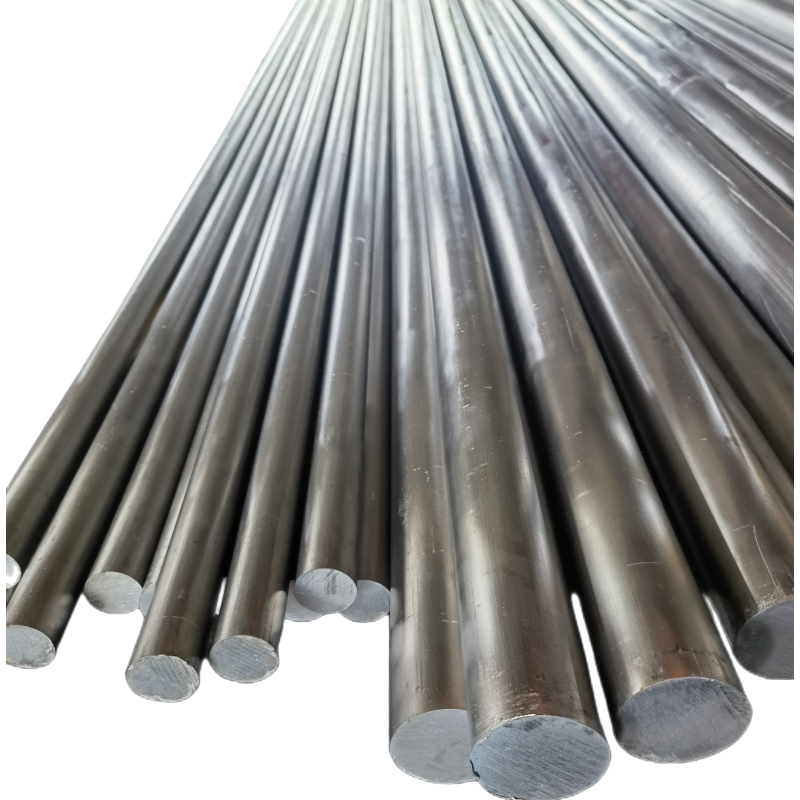
2024 aluminum alloy, particularly in T4 and T3511 tempers, represents a pinnacle of high-strength aluminum solutions for critical structural applications. As a premier supplier specializing in aluminum plates, bars, tubes, and precision machining, we provide in-depth technical insights into this aerospace grade material. This article elucidates the chemical composition, mechanical and physical properties, and diverse industrial applications of 2024-T4 and T3511 aluminum bars. Engineered for professionals seeking reliability under demanding conditions, this content serves as a definitive guide for material selection and procurement.
Chemical Composition: The Foundation of Performance
The exceptional properties of 2024 aluminum stem from its meticulously balanced alloying elements, conforming to standards such as ASTM B211 and AMS 4121. The composition is engineered for optimal precipitation hardening response.
Primary Alloying Elements:
· Copper (Cu): 3.8%~4.9% – As the principal hardening agent, copper forms coherent θ’ (Al2Cu) precipitates during aging, delivering significant strength enhancement through solid-solution and precipitation strengthening mechanisms.
· Magnesium (Mg): 1.2%~1.8% – Synergizes with copper to form S’ (Al2CuMg) phases, contributing to increased tensile strength and improving the alloy’s response to artificial aging.
· Manganese (Mn): 0.30%~0.9% – Acts as a grain refiner and dispersoid former (Al20Cu2Mn3), enhancing toughness and controlling grain structure to mitigate recrystallization during thermal processing.
· Iron (Fe) & Silicon (Si): Limited to ≤0.50% and ≤0.50% respectively – These are controlled as impurities to prevent the formation of brittle intermetallic compounds that could compromise ductility and fatigue resistance.
The T4 temper indicates a solution heat-treated and naturally aged condition. Bars are heated to approximately 495°C (923°F), quenched to retain a supersaturated solid solution, and then aged at room temperature to achieve stabilization.
TheT3511 temper further subjects the solution-treated and quenched bar to a controlled stretching process (1–3% permanent set) prior to natural aging. This critical mechanical working effectively relieves quenching-induced residual stresses, significantly improving dimensional stability for subsequent machining operations.
Mechanical and Physical Properties
2024-T4/T3511 bars offer an outstanding strength-to-weight ratio, making them superior to many other aluminum alloys in static and dynamic load-bearing scenarios.
Mechanical Properties (Typical Values):
· Ultimate Tensile Strength (UTS): 2024-T4: 470 MPa (68 ksi); T3511: 425 MPa (62 ksi). The stretching process in T3511 slightly reduces UTS but dramatically enhances stress-corrosion cracking resistance and stability.
· Tensile Yield Strength (0.2% Offset): T4: 325 MPa (47 ksi); T3511: 290 MPa (42 ksi). This provides a high margin against plastic deformation.
· Elongation at Break: 10–20% in 2 inches (T4); 12–22% (T3511). The T3511 temper typically exhibits improved ductility due to stress relief.
· Fatigue Strength (Rotating Beam, 5×10^8 cycles): ~140 MPa (20 ksi). Excellent for components subjected to cyclic loading.
· Fracture Toughness (K1c): Approximately 26 MPa√m – A key metric for damage-tolerant design in aerospace structures.
· Hardness: 120–130 Brinell (HB), indicating good resistance to wear and indentation.
Physical Properties:
· Density: 2.78 g/cm³ (0.101 lb/in³) – A lightweight advantage for weight-critical designs.
· Modulus of Elasticity: 73.1 GPa (10.6 x 10^6 psi) – Provides stiffness for structural components.
· Thermal Conductivity: 121 W/m·K (70% of pure Al) – Adequate for heat dissipation applications.
· Electrical Conductivity: 30%~40% IACS – Suitable for non-critical electrical components.
· Coefficient of Thermal Expansion: 23.2 x 10^-6/°C – Must be accounted for in precision assemblies operating across temperature ranges.
Corrosion Behavior:
2024 alloy, due to its high copper content, has lower general corrosion resistance compared to 5000 or 6000 series alloys. In the T4/T3511 condition, it is susceptible to intergranular and exfoliation corrosion, particularly in humid or saline environments. Therefore, protective treatments are mandatory for exterior applications. Anodizing (Type II or III), alodining, or application of primer/paint systems are standard industrial practices. For internal, dry-environment components, bare alloy may be acceptable with proper design.
Application Spectrum: Where Performance is Non-Negotiable
The combination of high strength, machinability, and lightweight makes 2024-T4/T3511 bars indispensable across several high-stakes industries.
1. Aerospace & Aviation (Primary Market):
· Structural Components: Wing ribs, fuselage frames, and bulkheads, where the high specific strength directly contributes to fuel efficiency and payload capacity.
· Landing Gear Parts: Truck beams, pistons, and supporting structures benefiting from high yield strength and fatigue resistance.
· Control Mechanisms: Pulleys, brackets, and actuator housings that require precise machining from bar stock.
2. Defense & Military:
· Armor Vehicle Structures: Used in lightweight armor plates and structural chassis elements.
· Missile & Ordnance Components: Housings, fins, and launch canisters where strength and reliability are critical.
3. High-Performance Automotive & Racing:
· Suspension Components: Forged or machined control arms, uprights, and sway bars in Formula and high-end racing vehicles.
· Drivetrain Parts: Selective gears, shift forks, and connecting rods, leveraging excellent machinability.
4. Precision Machinery & Tooling:
· Jigs and Fixtures: For CNC machining centers, where dimensional stability (especially T3511) prevents deflection and ensures part accuracy.
· Robotic Arms: Lightweight structural members that increase speed and reduce inertia in automated systems.
5. Specialized Sporting Goods:
· High-Stress Bicycle Components: Machined derailleur parts, crank arms for competitive cycling.
· Mountaineering Equipment: Ice axe shafts and climbing gear requiring a high strength-to-weight ratio.
Machinability and Fabrication Notes:
2024 aluminum bars exhibitgood machinability (a rating of 70% relative to the reference free cutting brass). They produce small, broken chips and can achieve excellent surface finishes. However, tools must be sharp and positive rake geometries are recommended to mitigate work-hardening tendencies. Welding is generally not recommended for 2024-T4/T3511 due to high susceptibility to solidification cracking in the heat affected zone (HAZ). If joining is necessary, adhesive bonding or mechanical fastening are preferred methods.
2024-T4 and T3511 aluminum bars are engineered solutions where lightweight design must coexist with uncompromising strength. The T4 temper offers peak as-aged strength, while the T3511 temper provides superior dimensional stability for complex, precision-machined components. Understanding their properties, including the imperative for corrosion protection is key to successful implementation.
Our company supplies premium 2024 aluminum bars, backed by expert technical support and precision machining capabilities. We ensure material traceability and compliance with international standards, delivering products that meet the rigorous demands of aerospace, defense, and high-tech industries.
Contact us today to discuss your specific requirements for 2024 aluminum bars or other aluminum products. Let our expertise become the foundation of your next high-performance project.
Post time: Jan-06-2026