


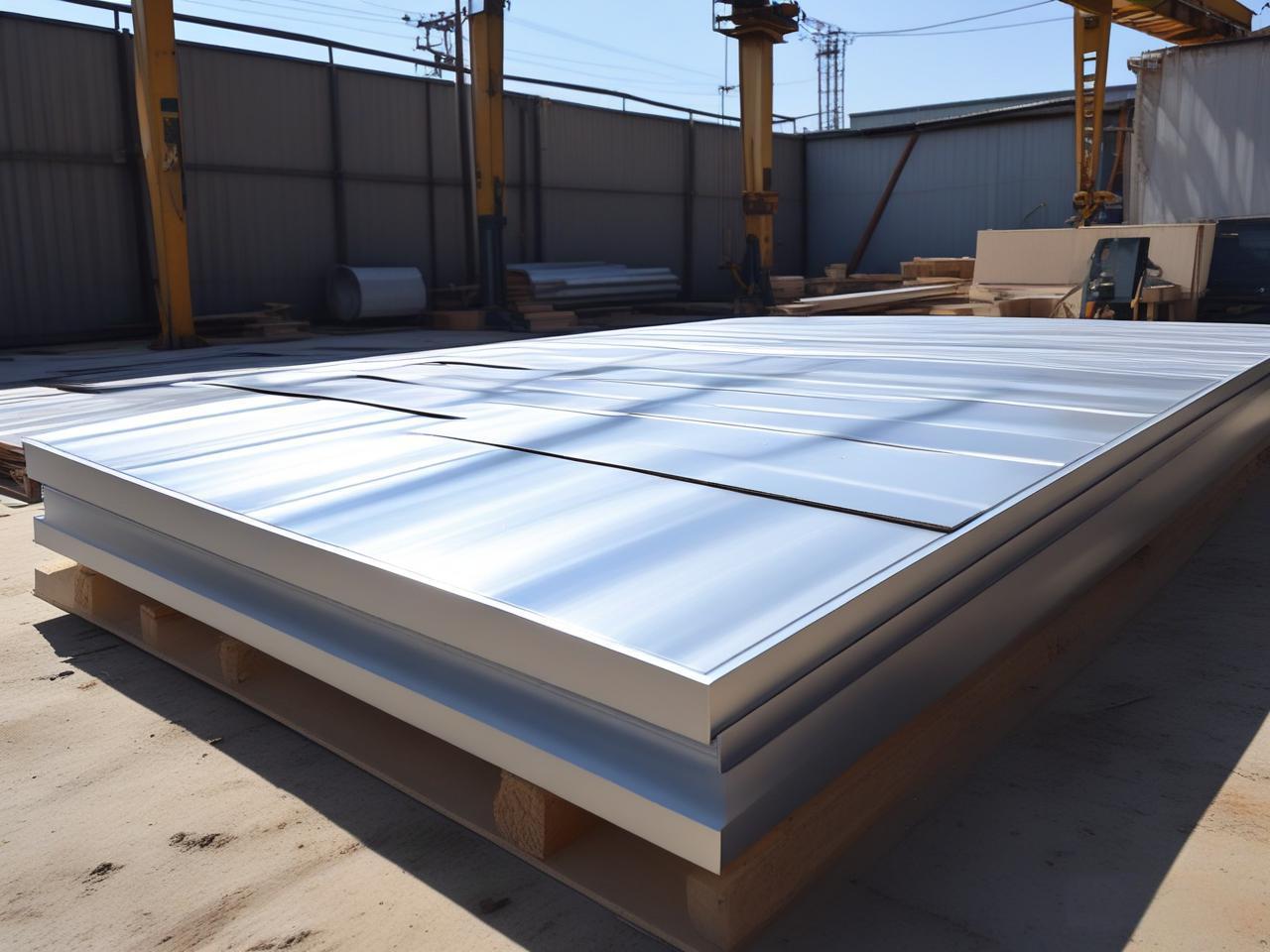
Recently, China’s aluminum processing industry has shown a rare hot scene. According to CCTV Finance, from aluminum sheet, strip, foil to aluminum wire, enterprises in multiple segmented fields have full orders, and production workshops continue to operate at high loads. A company that produces both aluminum foil blanks for new energy batteries and “double zero foil” for food packaging has reported a significant increase in order volume compared to the same period last year. Currently, all 13 aluminum foil casting and rolling production lines are at full capacity.
In the field of online materials and pipes, some companies have reported that their products have almost “zero inventory” and their daily production is shipped out on the same day. To cope with the continuously growing demand, especially new orders from the fields of new energy and high-end manufacturing, multiple companies have started a new round of capacity expansion.
Behind the high prosperity of the industry is the dual driving force of strong domestic demand and the inflow of overseas orders. Domestically, the rapid development of industries such as new energy vehicles, photovoltaics, energy storage, and consumer electronics continues to drive demand for high-end and high-performance aluminum materials.
Overseas, recent geopolitical conflicts such as the Middle East situation have intensified the uncertainty of the global aluminum supply chain, leading to production disruptions and supply tightening at some overseas aluminum plants. In contrast, the Chinese aluminum industry chain, with its complete industrial system, stable production capacity output, and continuously improving product quality, has demonstrated strong resilience and effectively undertaken some of the transferred overseas orders. According to data from the General Administration of Customs, from January to April 2026, the export volume of unprocessed and rolled aluminum and aluminum materials in China reached 2.053 million tons, a year-on-year increase of 8.9%, confirming the growth of external demand.
The current prosperity of the aluminum processing industry is a typical result of the resonance between “domestic demand upgrading” and “external demand substitution”, but it still requires cold thinking under the prosperity. The growth of domestic demand has structural characteristics and is highly dependent on a few high growth tracks such as new energy, while the recovery of traditional aluminum fields such as construction is slow, indicating that the industry’s prosperity is not fully flourishing. The influx of overseas orders is certainly welcome, but its sustainability is questionable, partly due to short-term supply chain disruptions caused by geopolitical conflicts. Once the situation eases or overseas production capacity is restored, these “returning” orders may be transferred again.
What is more noteworthy is that the current trend of “full production and zero inventory” in the industry is stimulating a new round of capacity expansion impulse. Historical experience has shown that concentrated expansion during peak demand periods can easily lead to new overcapacity risks in the future, especially in the field of homogeneous products at the mid to low end. Therefore, the current strategic focus of enterprises should not only be on expanding production capacity, but also on the research and development of high-end products with higher technological barriers, enhancing added value in aerospace, automotive lightweight precision components and other fields, and strengthening the resilience and green low-carbon attributes of the supply chain. Only in this way can the current “order feast” be transformed into a solid foundation for the long-term high-quality development of the industry.
Post time: May-20-2026